Children, Teens Getting Hooked on Gambling

Researchers and news outlets are sounding the alarm over concerns about kids getting hooked on sports betting.

Today sports betting is legal through most of the the U.S., and more than half of men ages 18 – 49 report having an active sportsbook account online. Arkansans wagered a record $86.5 million in March alone this year.

But evidence shows teens and young adults may be getting hooked on sports betting and other types of gambling through advertisements and social media posts that appeal to children.

A report from Common Sense Media earlier this year found 36% of boys ages 11 to 17 reported gambling in the past year. Of those boys, 59% said social media content about gambling just started appearing in their social media feeds.

Jim Steyer, CEO, Founder, and Board Co-Chair of Common Sense Media, said, “The reality is that we’re at an inflection point. We can either let gambling become normalized during boys’ most vulnerable developmental years, or we can act now—with education, safeguards, and real accountability.”

“Prediction markets” that operate outside the scope of state regulation are also concerning. News outlets report they are using memes and social media content that appeals to teens.

Researchers have repeatedly voiced concerns about sports advertisements that aggressively target young adults.

We have written repeatedly about how mobile sports betting apps use addictive technology to hook people — especially young adults.

People who gamble on sports may be twice as likely to suffer from gambling problems. When sports betting happens online or on a smartphone, the rate is even higher.

Twenty-year-old males account for approximately 40% of calls to gambling addiction hotlines, and upwards of 20 million men are in debt or have been in debt as a result of sports betting. In 2024, the Arkansas Problem Gambling Council announced a 22% increase in calls for help with problem gambling — driven largely by sports betting.

On the whole, most Americans do not believe sports betting has been good for society or good for sports.

Arkansas families need to understand that sports betting isn’t harmless entertainment — it’s predatory, and it’s growing.

As powerful corporations try to make gambling part of everyday life, it’s important for Arkansas to protect its citizens and families from predatory gambling. Otherwise, gambling addiction will simply continue wrecking lives and hurting families in our state.

Articles appearing on this website are written with the aid of Family Council’s researchers and writers.

Why is Support for Same-Sex Marriage and Other Pro-LGBT Issues Falling?

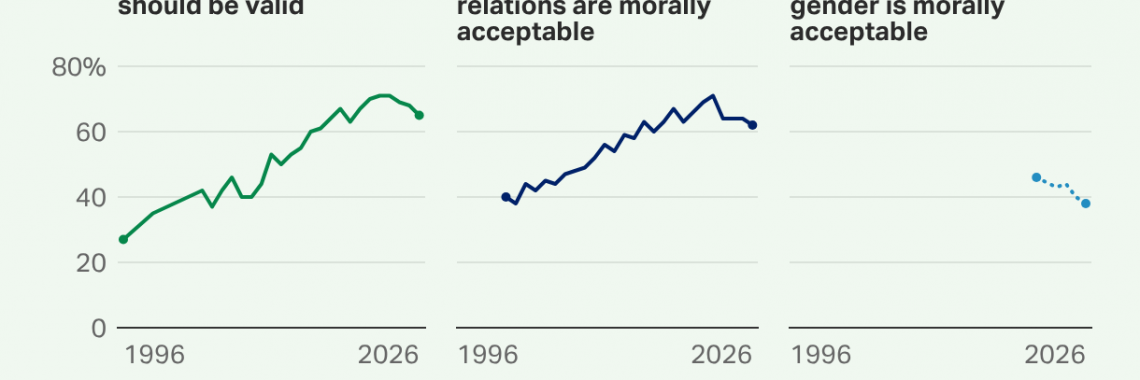
Last week, pollsters at Gallup reported that support for same-sex marriage and other pro-LGBT issues “remains down” in the U.S.

For years, survey data indicated a growing share of Americans were pro-LGBT and supported same-sex marriage. That trend seemed to culminate in 2015 when the U.S. Supreme Court overturned state marriage laws nationwide with its Obergefell v. Hodges decision.

But since 2024, polling data has showed a drop in support for same-sex marriage.

The latest numbers from Gallup reveal 65% of U.S. adults support same-sex marriage. That’s still a high number, but it is down from 71% in 2022.

Gallup also found 57% of adults believe it is morally wrong to change genders. That’s a major increase from 51% in 2021.

Gallup says Republicans are “largely responsible” for the shift in attitudes on same-sex marriage and pro-LGBT issues, but the truth may be more complicated.

Gallup found only 37% of Republicans now say same-sex marriage should be legal — which is down 18 points since 2022.

But Gallup’s data also shows support for same-sex marriage has fallen among Independent voters as well.

And although it may not be statistically significant, support for same-sex marriage among Democrats has been up and down from year to year.

So why have pro-LGBT attitudes started falling the past few years? It could be the same reasons that corporate Pride has fizzled and Fortune 500 companies have abandoned the pro-LGBT Equality Index: Pro-LGBT groups keep putting more and more demands on their “allies.”

According to organizations like the Human Rights Campaign, it isn’t enough to support same-sex marriage. Employers must provide “transgender-inclusive” health insurance plans, demonstrate “outreach to and engagement with the LGBTQ+ community,” and so forth.

In other words, it seems like there’s no such thing as being pro-LGBT “enough.”

There has also been nationwide pushback against pro-LGBT pandering since Obergefell.

Major companies from Walmart to Target and John Deere to Lowe’s have rolled back pro-LGBT and DEI policies in response to consumer backlash. Entertainment giants like Pixar and Disney have removed pro-LGBT elements from their storylines in response to moviegoers.

When the U.S. Supreme Court issued the Obergefell decision, many people said redefining marriage would erode religious liberty, erase distinctions between men and women, fundamentally change parenthood, and hurt children. In fact, children arguably are the victims hurt most by the Obergefell and the pro-LGBT movement.

Pro-LGBT activists and medical organizations spent years citing each other’s work in a circular pattern to manufacture a fake consensus about performing sex-change procedures on kids. Since then, whistleblowers have come forward testifying about how they were rushed through gender transitions as children without understanding the procedures’ risks, consequences, or alternatives.

All of this seems to have caused many people to rethink same-sex marriage and pro-LGBT activism in general. Gallup’s survey findings may be a reflection of that.

Articles appearing on this website are written with the aid of Family Council’s researchers and writers.